
The origins
Palmistry is one of the oldest forms of symbolic interpretation of the human being. Its roots go back to ancient India, where it was practised as part of the Hindu system of astrology, and toChina, where hands were read as maps of destiny thousands of years ago.
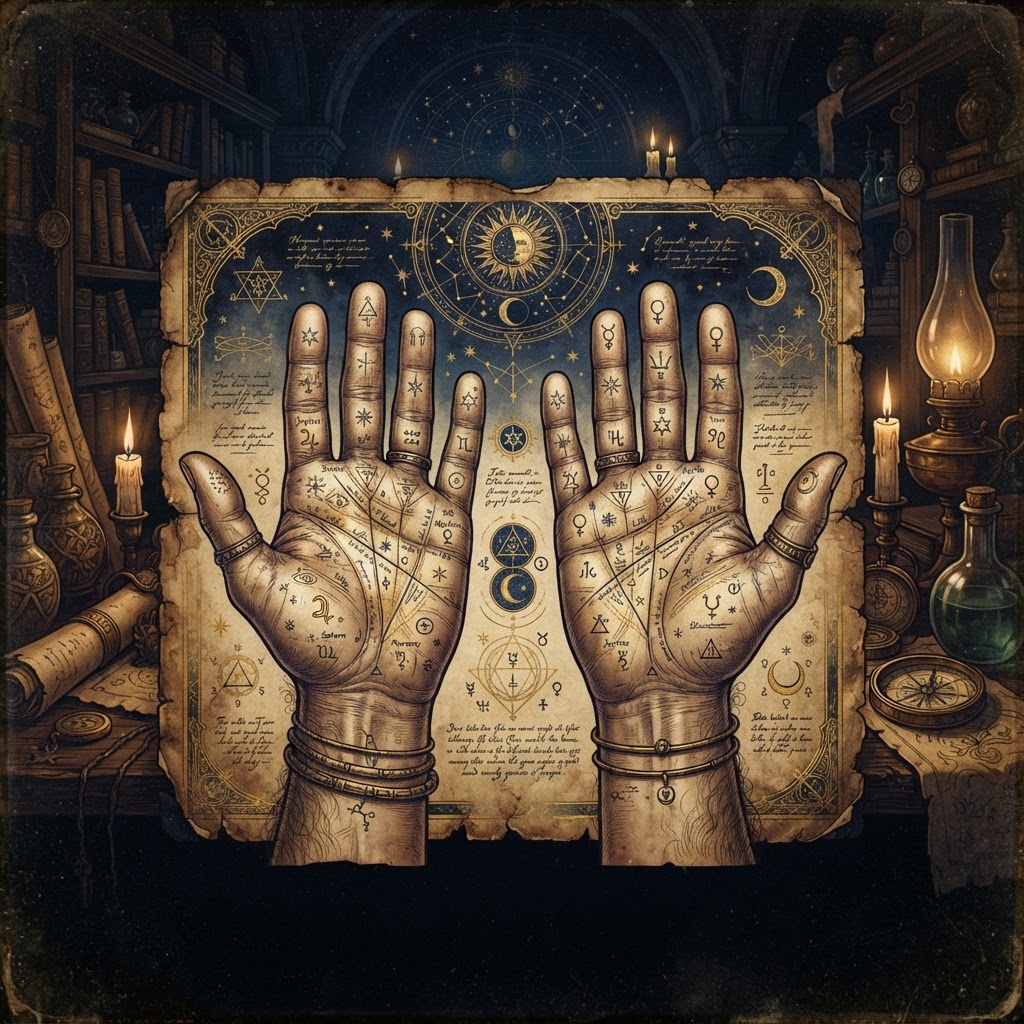
In Ancient Greece, philosophers such as Aristotle wrote about the importance of the lines of the hand, teaching that they do not arise without reason. The practice spread through the Arab world, medieval Europe and the Renaissance, gaining systematisation over the centuries, as the image alongside illustrates.
It is important to understand: palmistry is not an exact science nor a tool for guaranteed prediction. It is a symbolic language that invites reflection and self-knowledge, helping you recognise patterns, potentials and tendencies.
The five main lines
Every palmistry reading starts from observing the lines of the palm. Each one reveals a different layer of personality and of the symbolic journey.
1. Heart Line
Located in the upper part of the palm, it reveals emotional life — how you love, relate and express affection. Deep lines speak of intensity; soft lines, of sensitivity.
2. Head Line
It crosses the palm below the heart line and represents reasoning. It shows how you think, make decisions and process information — practical or imaginative, direct or reflective.
3. Life Line
Curving between the thumb and the index finger, it indicates vitality and energy. It does not predict longevity, but reflects life force, enthusiasm and your relationship with your own body.
4. Destiny Line
It descends vertically from the middle of the palm towards the wrist. It points to the life path, the purpose and the choices that shape your professional and personal trajectory.
5. Sun Line
Parallel to the destiny line, it speaks of recognition, success and achievements. It reflects personal radiance, talent and the way you are seen by the world.
How the reading is done
The tradition teaches that each hand reveals something different. The non-dominant hand (the left for right-handed people) shows innate potential, inherited patterns and the deep soul. The dominant hand reveals the present and the future.
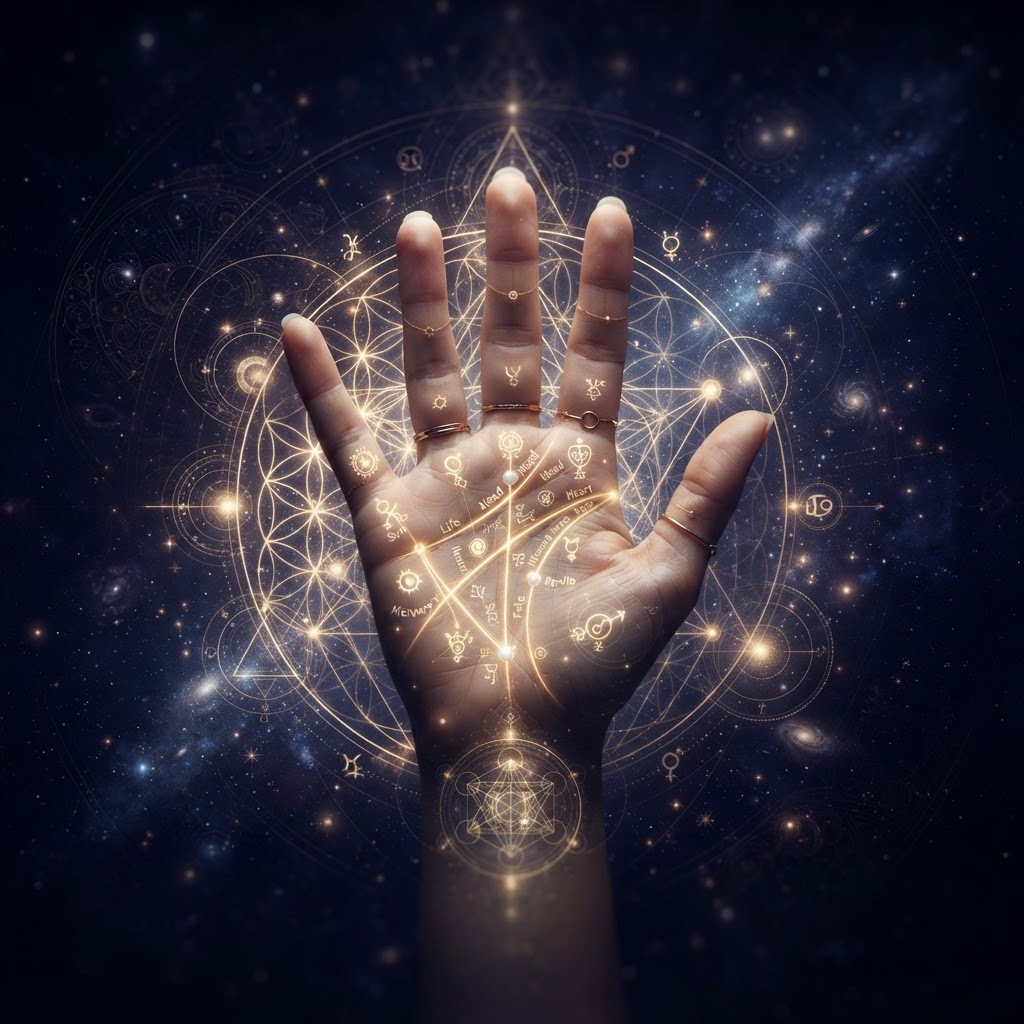
The analysis observes not only the lines but also the mounts (elevations on the palm, associated with planets), the shape of the fingers, the texture of the skin and the flexibility of the hand. Each element receives a symbolic interpretation that, added to the others, composes the portrait of the reading.
At Mística, you send a photo of your hand and the system combines these traditional elements to produce a personalised symbolic reading, as the diagram alongside shows.
What palmistry is for
Palmistry works as a symbolic mirror. It does not predict the future with any guarantee, nor does it replace medical, legal or professional guidance. Its value lies in offering a language to observe yourself: recognising talents, understanding emotions, reflecting on choices and noticing patterns that repeat.
Many people use palm reading as a tool for self-knowledge: understanding why certain themes appear often in life, how emotional energy expresses itself, or how the choices of the present are shaping the path.
At Mística, you can send a photo of your hand and receive a personalised symbolic reading, combining traditional palmistry wisdom with the symbolic interpretation of your lines.